

Powder as a Prerequisite for the Process—and as a Problem
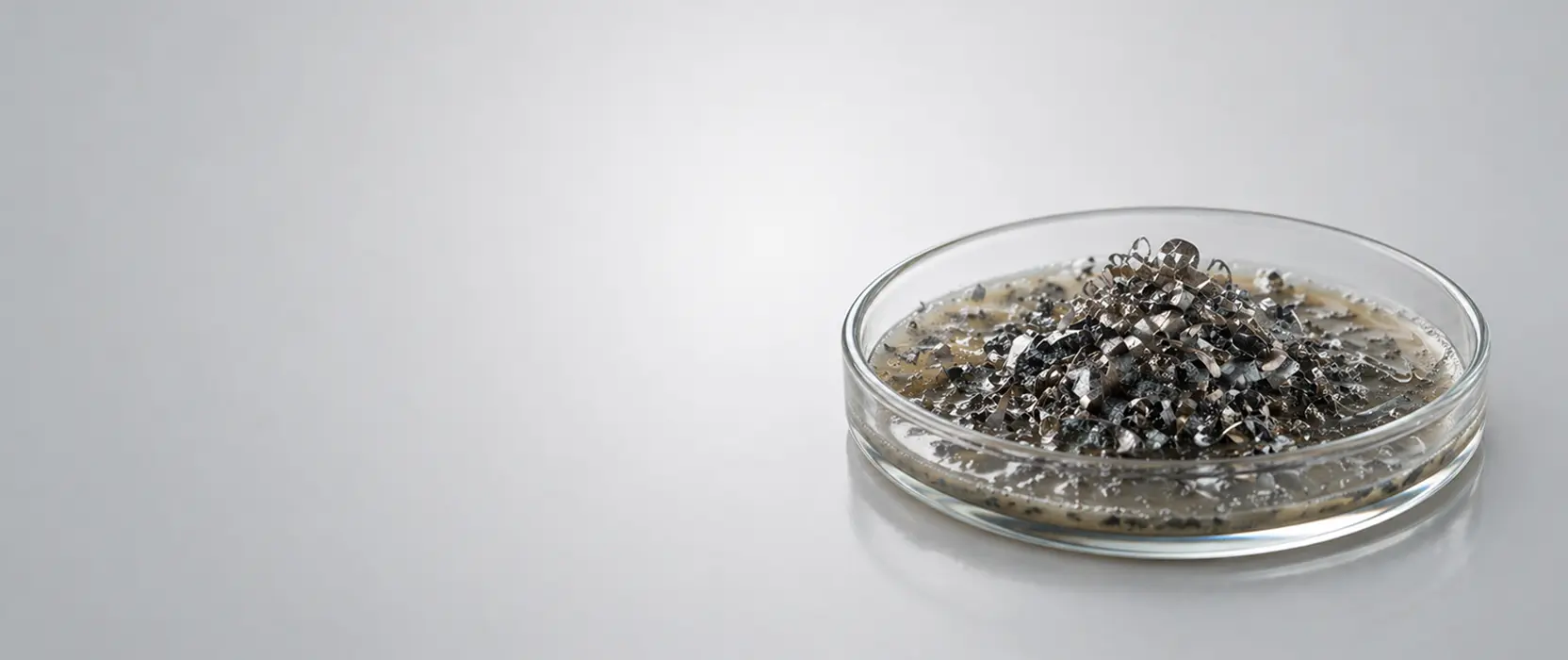
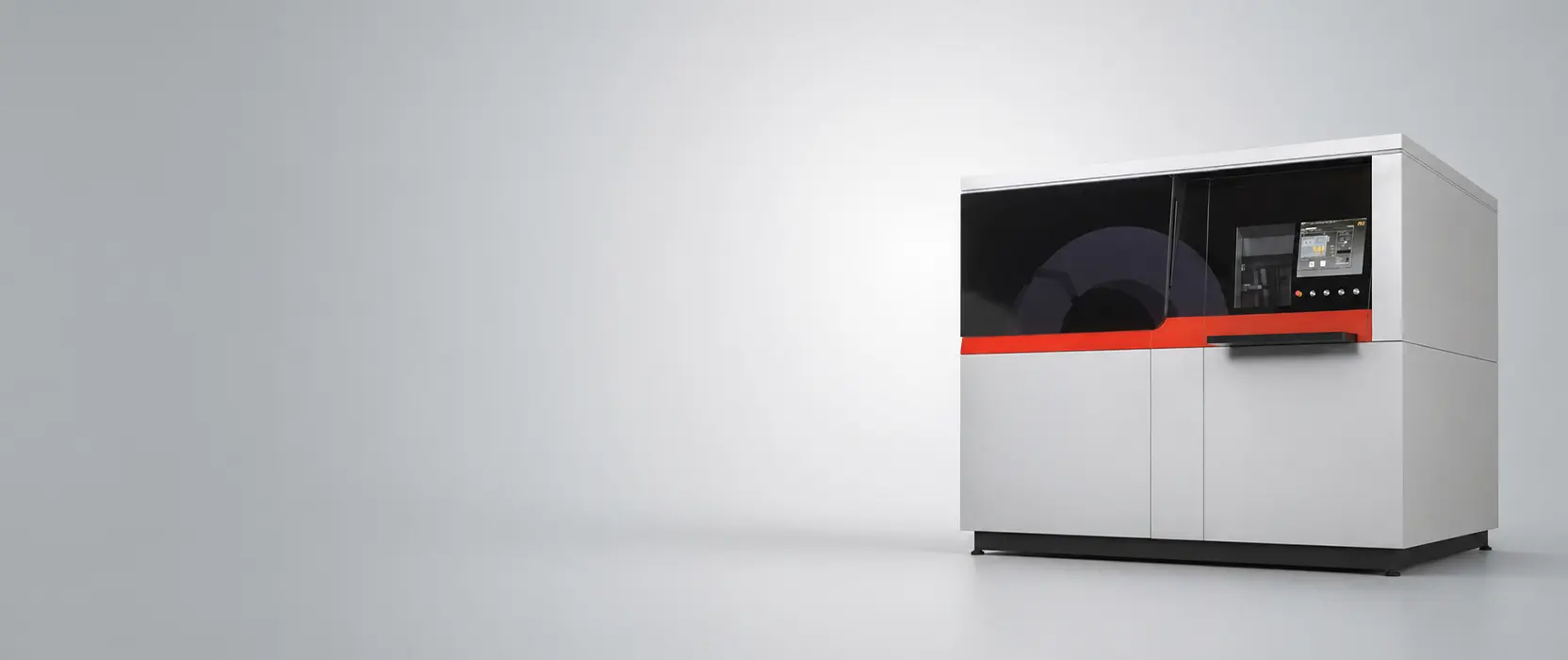
In additive manufacturing with metals, every component is created in a powder bed. A laser melts precisely the areas that will form the final component. All the surrounding powder remains unprocessed—and must be removed from the work area after each print job before the next cycle can begin.
That sounds like a simple cleaning task. It isn’t.
Because the remaining powder is simultaneously a raw material, a risk, and a cost factor. It must be removed without altering its properties, without creating safety risks, and ideally without causing material loss.
Why conventional extraction doesn’t work here
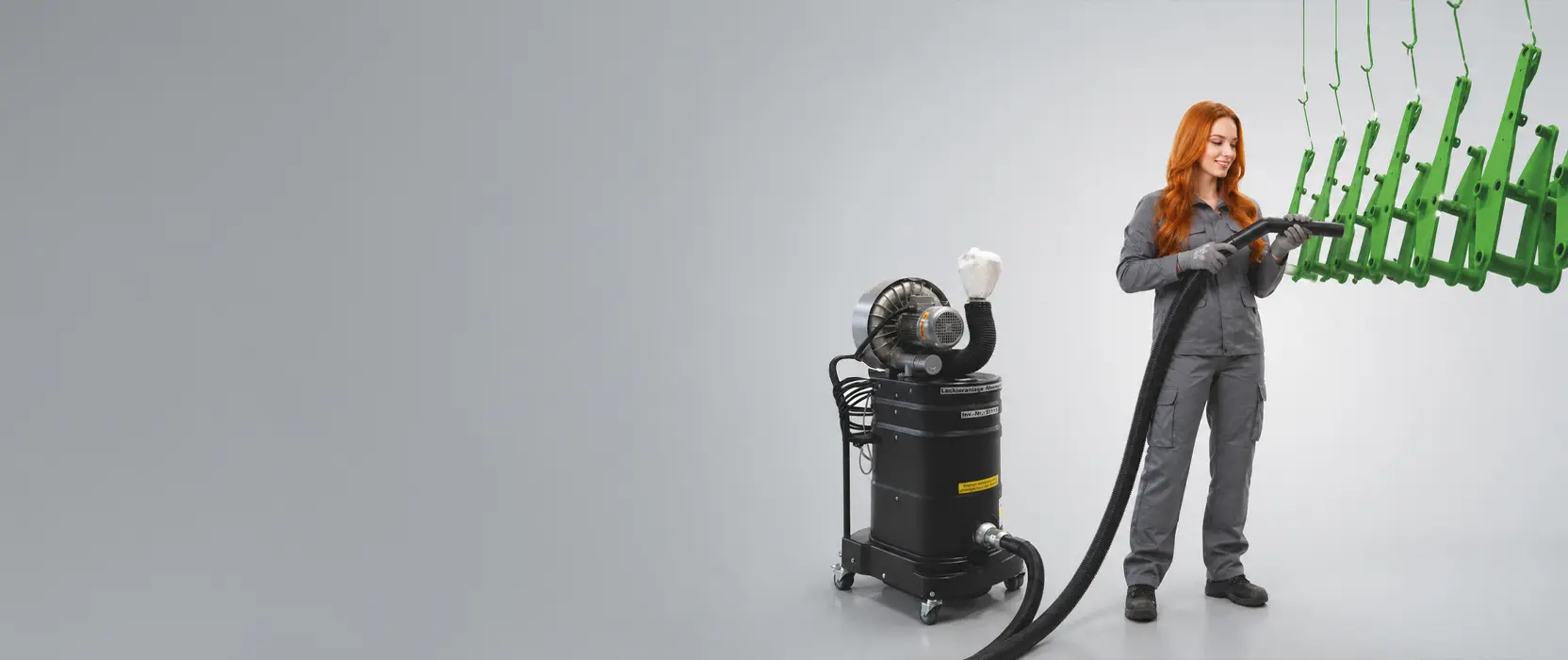
Metal powders for additive manufacturing—such as titanium, aluminum, or stainless steel alloys—are reactive dusts. When finely dispersed, as occurs during extraction, they can form explosive mixtures with air. Cleaning a filled workspace with a conventional industrial vacuum is therefore not a safe option.
The established solution is the wet separator. The extracted powder is directed into a liquid, where it loses its reactivity and can be safely disposed of. RUWAC has developed compact wet separators for this task—drawing on experience in processing reactive metals such as aluminum or titanium, where reactive metal dusts have been part of everyday work for decades. These systems are now also established in the field of additive metal manufacturing.
This method is safe and proven. Its drawback: The material is no longer reusable after use with a wet separator.
It is often assumed that safety and material recovery are mutually exclusive. However, practice shows that both goals can be combined—if the process architecture is designed accordingly.
Why material loss is an economic problem
Metal powders for additive manufacturing are expensive. For titanium or special alloys, material costs can reach several hundred euros per kilogram. After each printing process, a significant portion of the powder used remains unprocessed in the workspace—a portion that is completely lost with consistent use of a wet separator.
Anyone seeking to operate additive manufacturing economically must therefore address the issue of material recovery.
This is not about fine-tuning details, but about a fundamental economic lever: the higher the proportion of reusable powder, the more stable the cost structure of the entire manufacturing process becomes.
A new process: Cyclone before wet separator
RUWAC, in collaboration with Fraunhofer IPA, has developed and tested a process that combines safety with material recovery.
The principle: A high-speed cyclone is installed upstream of the wet separator. The extracted powder first passes through the cyclone, which separates the majority of it in a dry state—that is, without contact with liquid and thus in a condition that fundamentally allows for reuse. Only the remaining fraction enters the downstream wet separator, where it is inerted and disposed of.
The results of the Fraunhofer IPA tests show that approximately 98 percent of the extracted powder is dry-separated in the cyclone. After screening and quality testing, it can be reused in production. Only about 2 percent is wet-separated.
The printing process itself remains unchanged. At the same time, the time-consuming manual cleaning step involving a brush and collection container is eliminated. The workspace is available again more quickly for the next printing job.
What this process demonstrates
Neither wet separator nor cyclone pre-separation are new technical principles. What matters is their combination—tailored to the specific requirements of reactive metal powders in additive manufacturing.
This illustrates a typical engineering principle of industrial extraction technology: Progress often arises not from new individual technologies, but from the intelligent combination of existing principles.
When approximately 98 percent of the material can be dry-separated and reused after processing, this changes not only the cleaning process—but also the economic assessment of the entire process.
Context
In additive manufacturing, extraction technology is often viewed primarily from a safety perspective. This perspective is correct—but incomplete.
This application demonstrates that extraction technology is simultaneously a matter of safety, material flow, and cost-effectiveness. What matters is not only how safely powder is removed, but also how it can be returned to the material cycle in a controlled manner.
In such applications, it becomes clear that the relevant question is not: Which component performs best? But rather: At what point in the material flow does the system intervene—and what does that enable in the subsequent process? RUWAC develops wet separators and cyclone pre-separators as coordinated system solutions because it is precisely this interaction that determines safety and cost-effectiveness.