


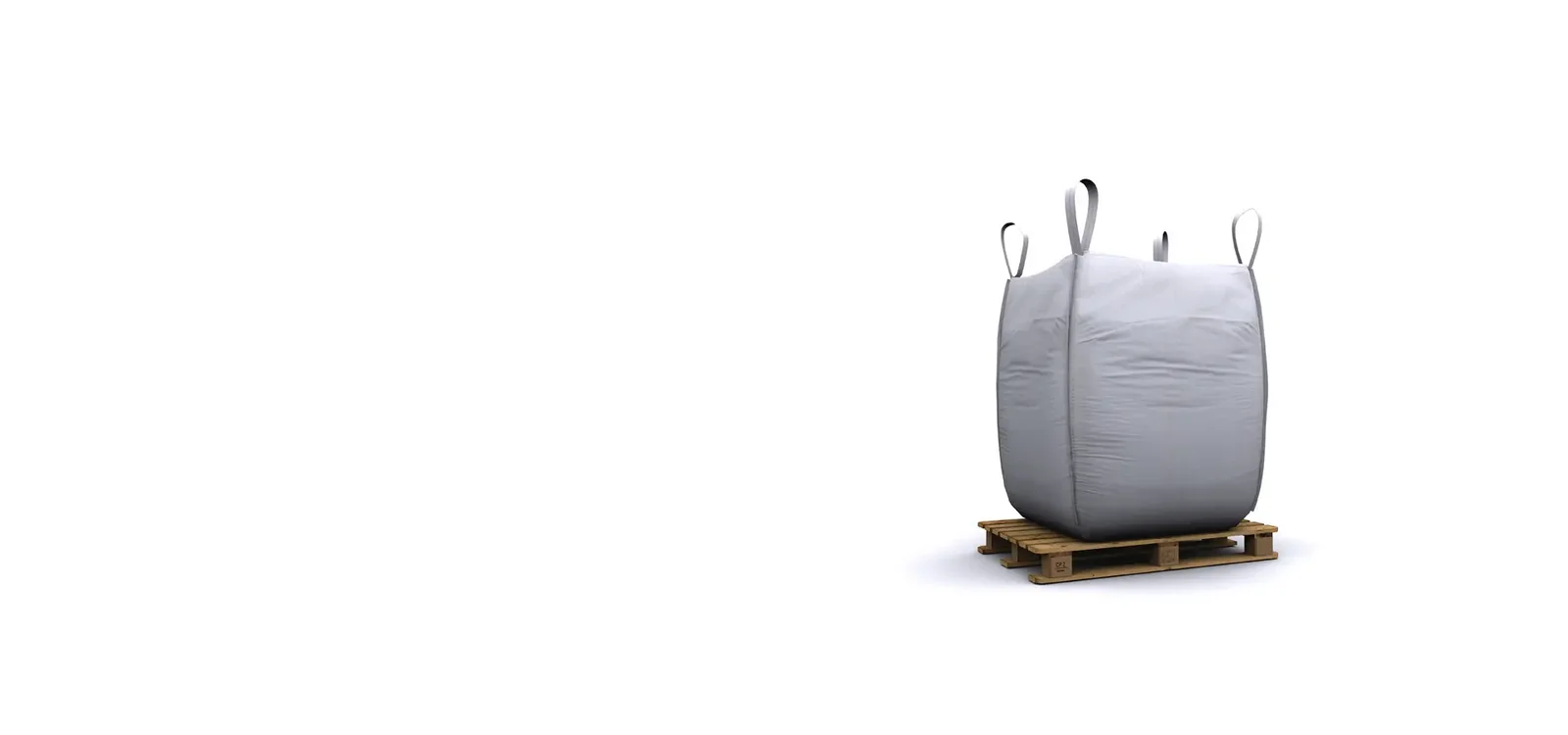
Waste Management Systems & Collection Solutions
How materials are collected, handled, and transferred determines the effort required, safety, and availability in operations.
Material handling systems describe how collected material is processed and discharged within the vacuum cleaner. They are not a downstream step, but rather an integral part of the overall material flow. Depending on the application, the collected material is either gathered directly into a container or continuously discharged via systems such as Longopac®. The goal is always the same: to pick up material in a controlled manner, guide it safely, and transfer it without interruption. This reduces the operational burden, minimizes contact with hazardous substances, and ensures consistent system performance.
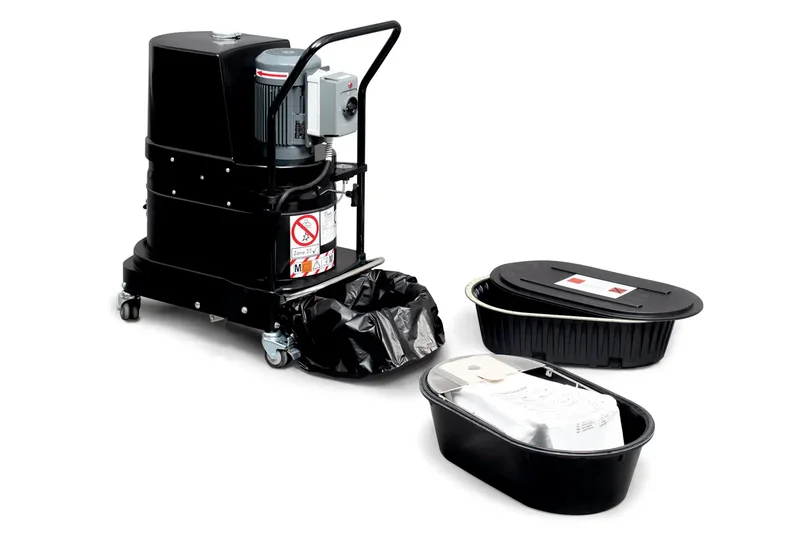
Classification
In many applications, extraction is considered only up to the point of collection—and no further. Yet it is precisely the disposal process that determines whether a system works in everyday use.
Full containers, stirred-up dust, or interrupted processes are rarely caused by the extraction system itself, but rather by unclear handoffs. Disposal systems provide structure here: they define how material is collected, separated, and transported further.
Collection in a container. Direct and durable.
The material to be vacuumed is collected in the vacuum cleaner’s built-in container. Depending on the design variant, different container sizes and liners are used—ranging from rigid trays to plastic or special bags for hazardous materials.
This solution is suitable for many applications involving manageable quantities of material or where flexibility in handling is required. Containers provided by the customer can also be integrated.
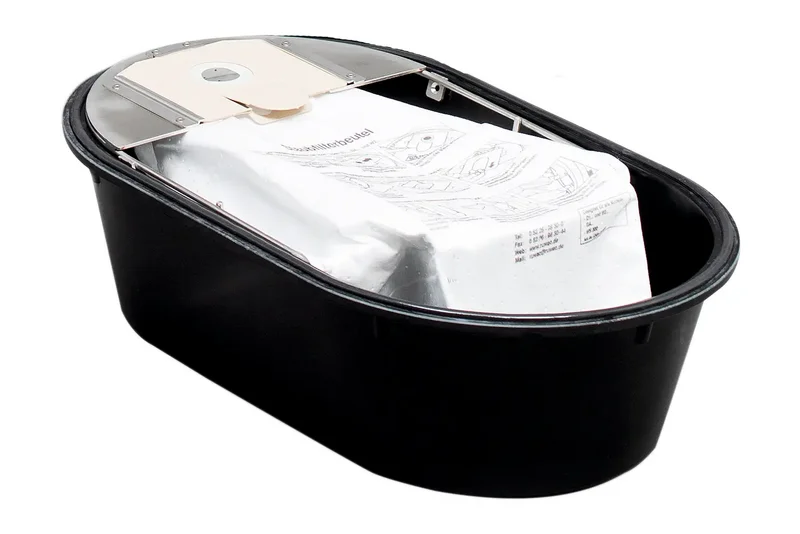
Types of containers
The material being vacuumed is collected in the vacuum cleaner's own waste container.
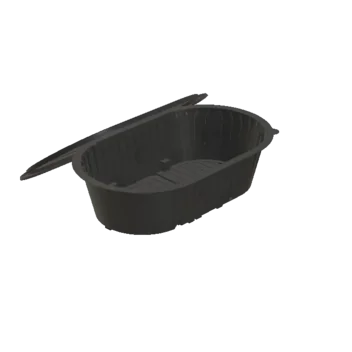
Waste collection tray | 35 liters
Suitable for the R01 series
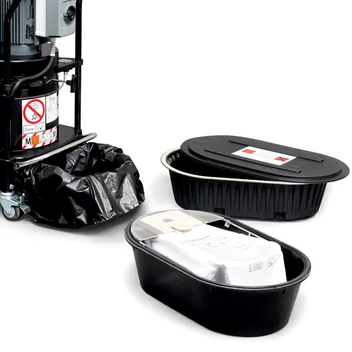
Waste collection tray | 35 liters
With a bag, filter bag, or disposal container for hazardous materials.
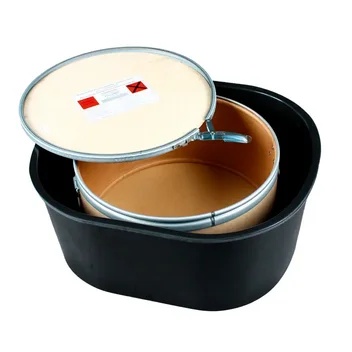
Waste collection tray | 50 liters
Suitable for the DS2 series
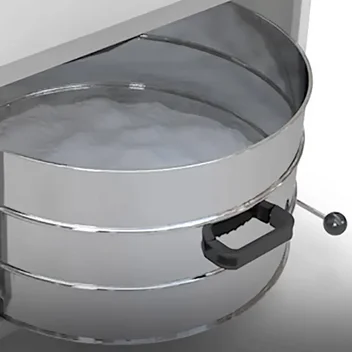
Waste collection tray | 50 liters
Suitable for the DS6 series | Plastic bags | Conductive
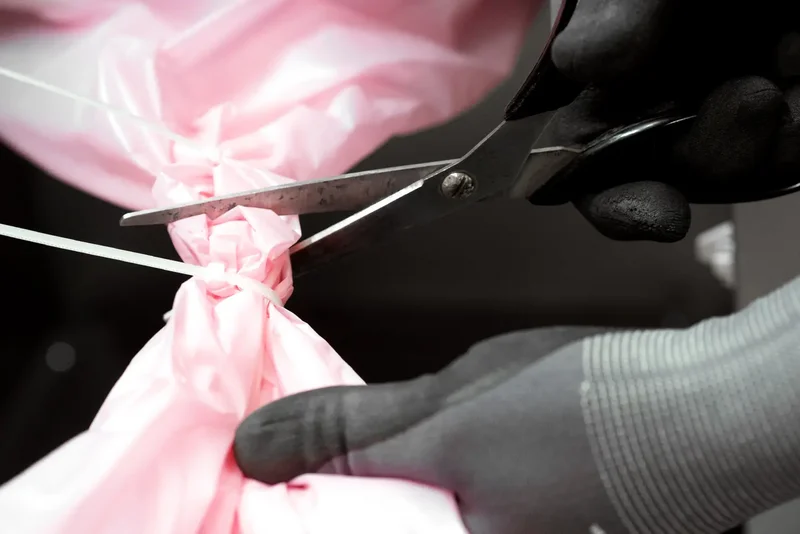
Continuous disposal with Longopac®.
Instead of individual bags, a plastic tube is used, which is cut to length, sealed, and continued as needed. This enables virtually uninterrupted operation.
Contact with the material being extracted is minimized, and dust disturbance during changes is reduced. At the same time, the system remains operational without the need for regular bag changes.
Limitations arise with coarse, sharp-edged, or very heavy materials that place mechanical stress on the film.
Variations of the Longopac® system
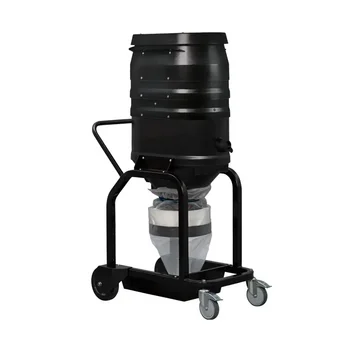
Under its own drive
Three-phase current and single-phase current available
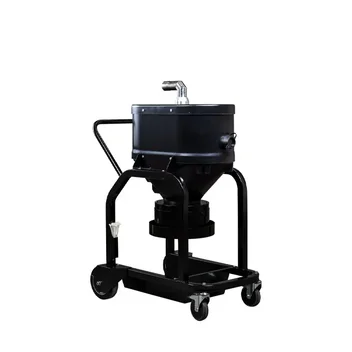
Without its own drive
The bulk solution
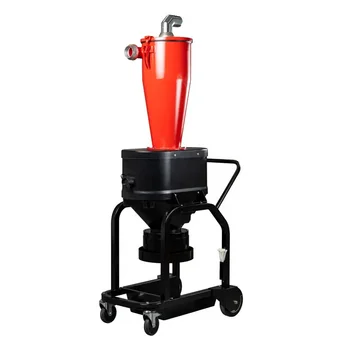
Without its own drive
The collection solution with a cyclone
R13
Longopac® system with its own drive
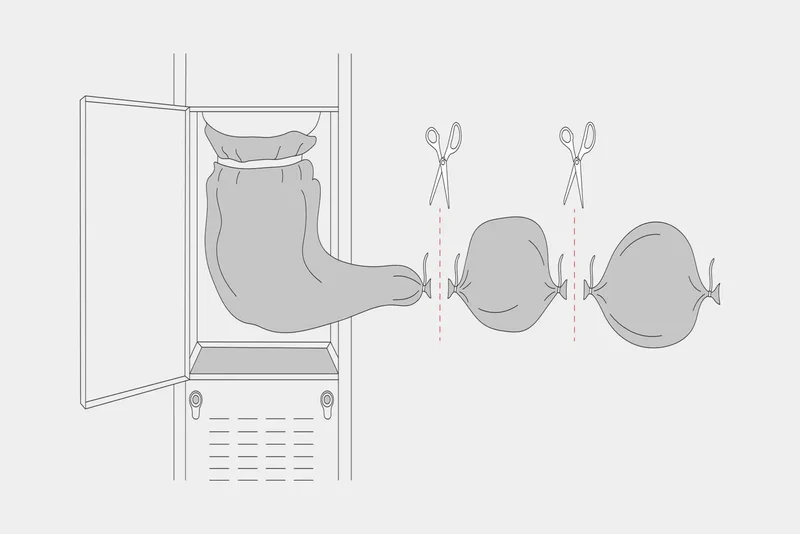
How the Longopac® System Works
Change the Longopac® tube in just 30 seconds
Insert the Longopac® system. Secure the end with a cable tie.
During operation, pull the Longopac® tube tight and secure it with a cable tie.
Dispose of the filled bag; proceed as in step 1.
Frequently Asked Questions (FAQ)
A container system works well for manageable quantities of material and clear emptying intervals. However, as soon as material accumulates continuously, needs to be emptied frequently, or contact with the material being vacuumed is critical, this solution reaches its limits. In such cases, continuous systems like Longopac® are useful for maintaining uninterrupted operation.
Continuous systems prevent downtime. The film tube is cut to length and sealed as needed without having to open the system. This reduces dust emissions, minimizes contact with the material, and enables uninterrupted operation—especially when handling fine or hazardous dusts.
Rough, sharp-edged, or very heavy materials can cause mechanical stress on the film and are therefore only suitable to a limited extent. In such cases, sturdy container solutions or alternative disposal methods are the better choice.
If material is not discharged in a controlled manner, it can cause interruptions in operations. Full containers, blocked discharge routes, or improper transfers directly affect the material flow—and thus also the stability of the extraction system. Disposal is therefore not a downstream step, but rather an integral part of a functioning system.
Yes. Waste disposal systems are designed to accommodate the specific materials, flow rates, and operational processes. Whether it’s an integrated container, a bag system, or a continuous solution—what matters is how well the system aligns with the overall process, not the individual components.
Waste Management Systems & Collection Solutions
Ensure materials are handed over cleanly. Maintain stable processes.
The design of a disposal system depends on the type of material, the volume, and the process flow. RUWAC helps integrate suitable solutions into existing processes.