



Dusts that are hazardous to health
Reliable.
Reproducible.
Scalable.

Health-hazardous dust is generated right in the middle of the process—during grinding, mixing, filling, or cleaning. It often remains in the air for a long time, is inhaled, and has a gradual rather than an acute effect. In addition to the amount of dust, particle size, duration of exposure, and the source of the dust play a central role. Protection is most effective where dust is captured immediately upon generation—in a permanent, process-integrated, and practical manner. This page addresses dust not from the perspective of cleanliness or explosion risk, but from the standpoint of long-term human exposure during the process.
What doesn't escalate has a lasting effect.
Hazardous dusts operate silently. They do not cause explosions, fires, or immediate shutdowns. Their effects unfold over time—through continuous exposure in the daily work routine.
Precisely because they do not trigger acute incidents, they often remain part of the process for a long time. This has consequences for employees, operations, and the long-term stability of work environments.
Dust creeps up on you. Protection must too.
Effective protection against hazardous dust does not begin with the equipment, but with the design of the process. The key factor is how particles are generated, dispersed, and inhaled over time in the actual process.
Safe solutions must start where exposure begins. Fine, respirable dust must not be allowed to spread unnoticed in the work area, but must be captured immediately and removed in a controlled manner—before it enters the air we breathe or settles on surfaces.
Equally crucial is the filtration and disposal technology. Particles that have been captured must not be released again. Filter systems must remain effective over the long term, and disposal systems must be closed-loop and designed to be safe for operating personnel.
Added to this is the reality of everyday work. Cleaning and extraction technology must function where processes change, time pressure prevails, and routines develop. Solutions that only provide protection under ideal conditions lose their effectiveness over time.
Protection against health-hazardous dusts is not a one-time measure. It is the result of a thoroughly thought-out solution that does not reduce exposure in the short term—but limits it permanently.
Hazardous dust does not have an immediate effect. It has a constant effect.
Hazardous dusts are not limited to specific industries. They are generated wherever materials are processed, transferred, or cleaned—often in the background, rarely in a dramatic way, but with lasting effects.
- In the chemical and pharmaceutical industries, fine dust is generated during dosing, filling, or formula changes. Here, effective dust collection is crucial for product safety and worker protection.
- In plastics processing, grinding, milling, and crushing steps release fiber and particle dusts that are respirable and, in some cases, electrically conductive—often directly at the manual workstation.
- In metal processing, health-hazardous dusts are generated during grinding, deburring, or cleaning of equipment, often combined with thermal or mechanical stress.
- In the building materials and food industries, mineral or organic dusts are part of everyday production—finely dispersed, constantly present, and not always immediately perceptible.
Regardless of the industry, the following applies:
Where dust is generated, its effects are not immediate—but accumulate over time.
And that is precisely where protection must begin: close to the process, permanent, and suitable for everyday use.
Practice born of necessity.
Hazardous dust rarely makes a dramatic appearance. It arises wherever materials are processed, cleaned, or removed—often in fine, invisible particles that have a lasting effect. The following examples show how protection works in everyday situations: closely integrated into processes, reliable, and without adding unnecessary complexity.
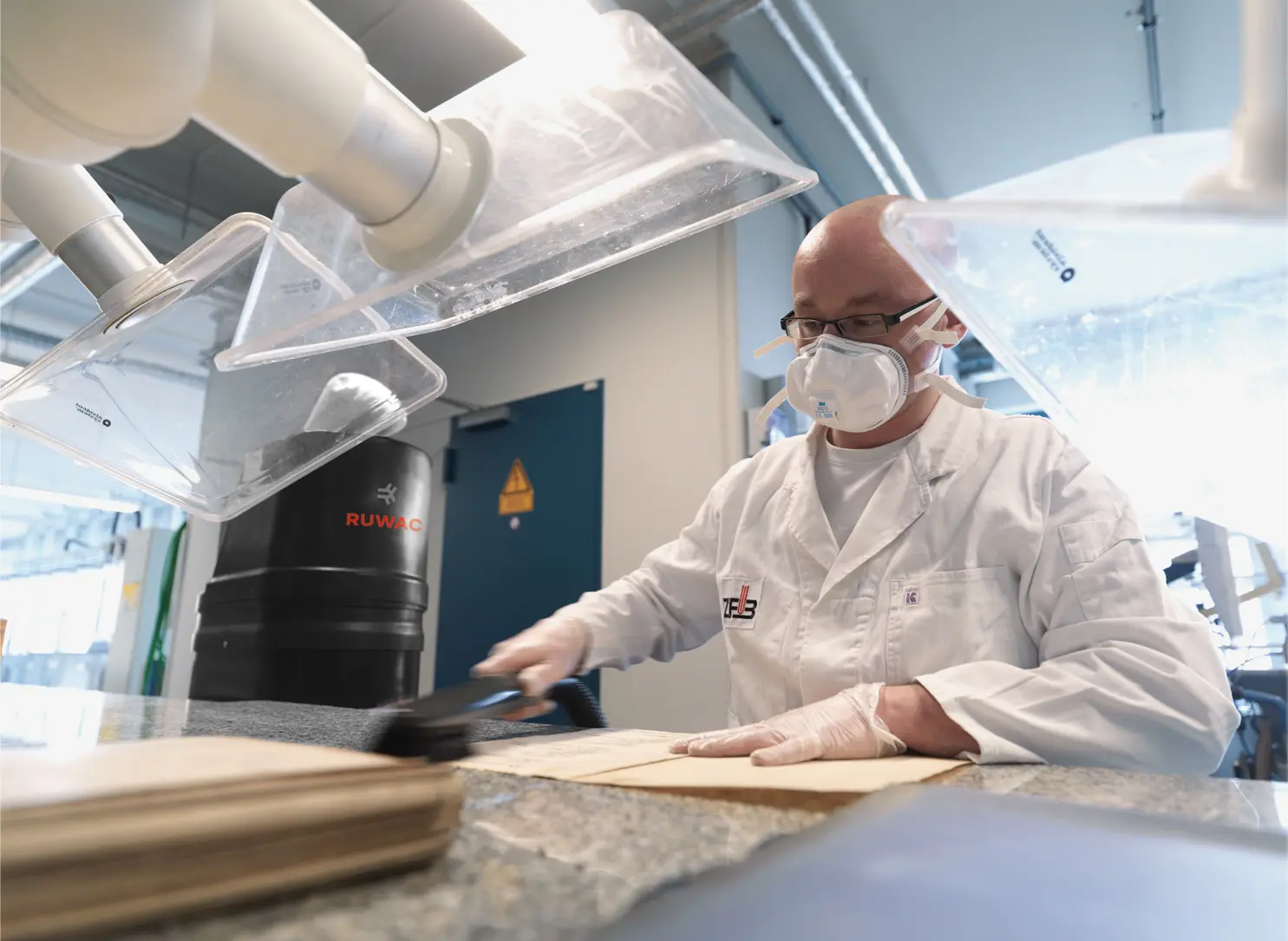
During the restoration of historical books, the removal of mold growth releases fine spores that can trigger allergic reactions. At the Center for Book Conservation in Leipzig, these residues are captured directly at the workstation and safely contained. Each restoration station is equipped with an extraction system that reliably captures even particles in the micrometer range. This protects both the work environment and the surrounding air—without damaging the delicate materials.
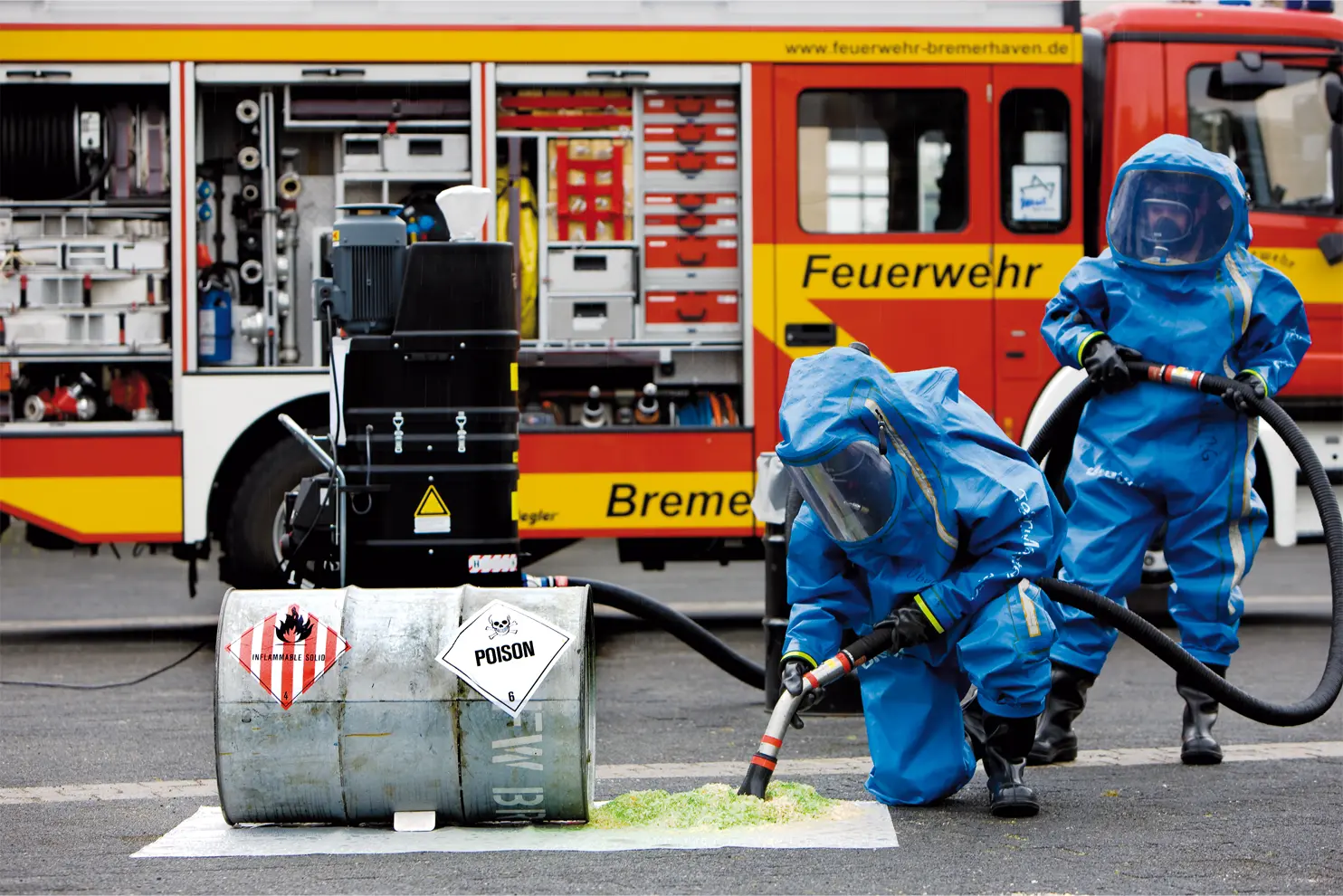
In emergency situations, it is often unclear which substances need to be collected. The Bremerhaven Fire Department therefore relies on flexible suction solutions capable of safely collecting a wide variety of dust-like and liquid substances—even when the specific hazards they pose have not yet been clearly identified. Closed-loop disposal systems ensure that collected substances can be handled in a controlled manner without endangering emergency personnel or the surrounding area.
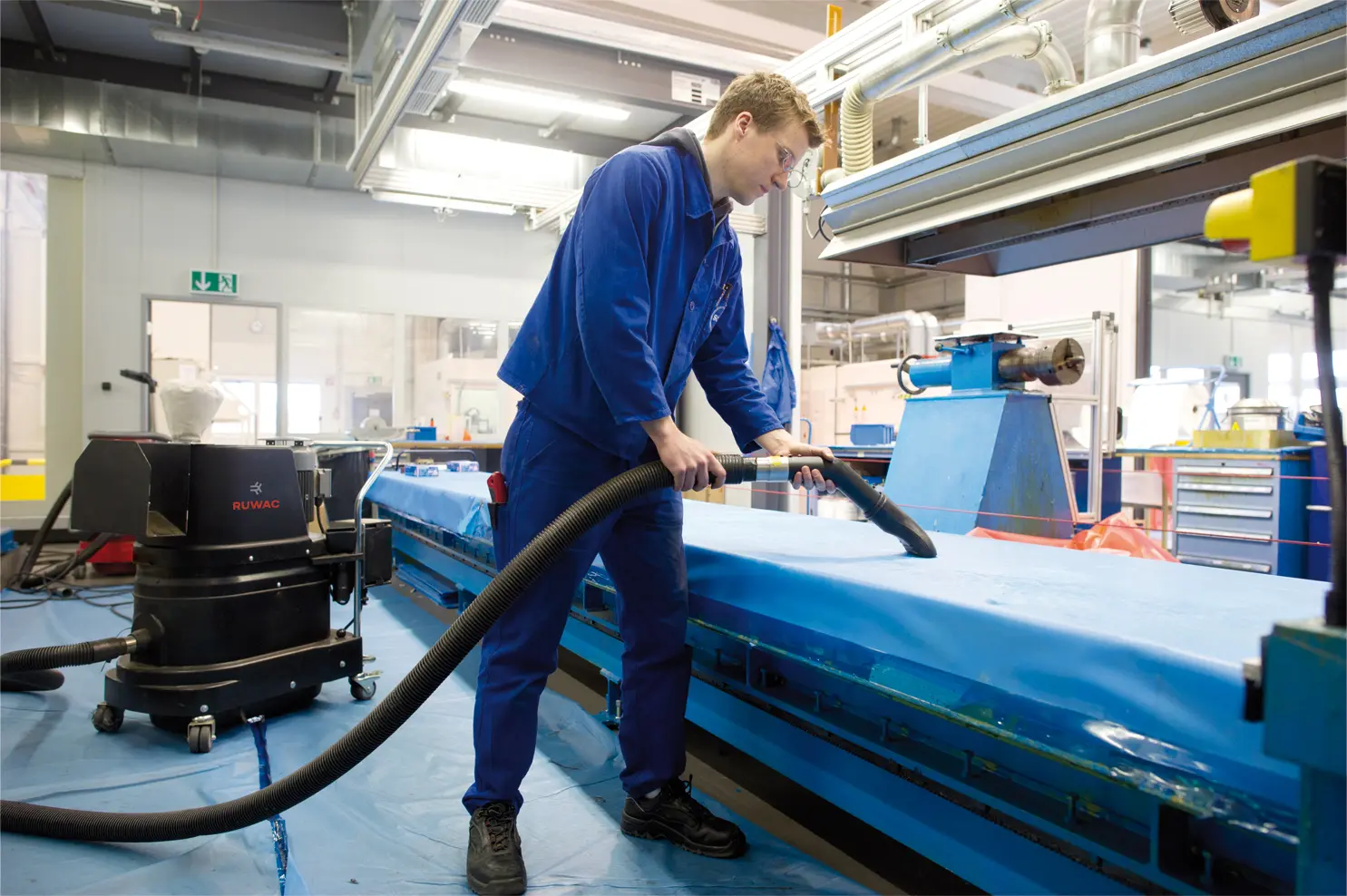
The processing of glass-fiber-reinforced plastics generates both fibrous dust and harmful fumes. At Schunk’s production facilities, these emissions are captured directly at each stage of the process—during lamination, grinding, and finishing. The extraction system is flexibly adapted to different tasks and significantly reduces the exposure of employees without interrupting the workflow.
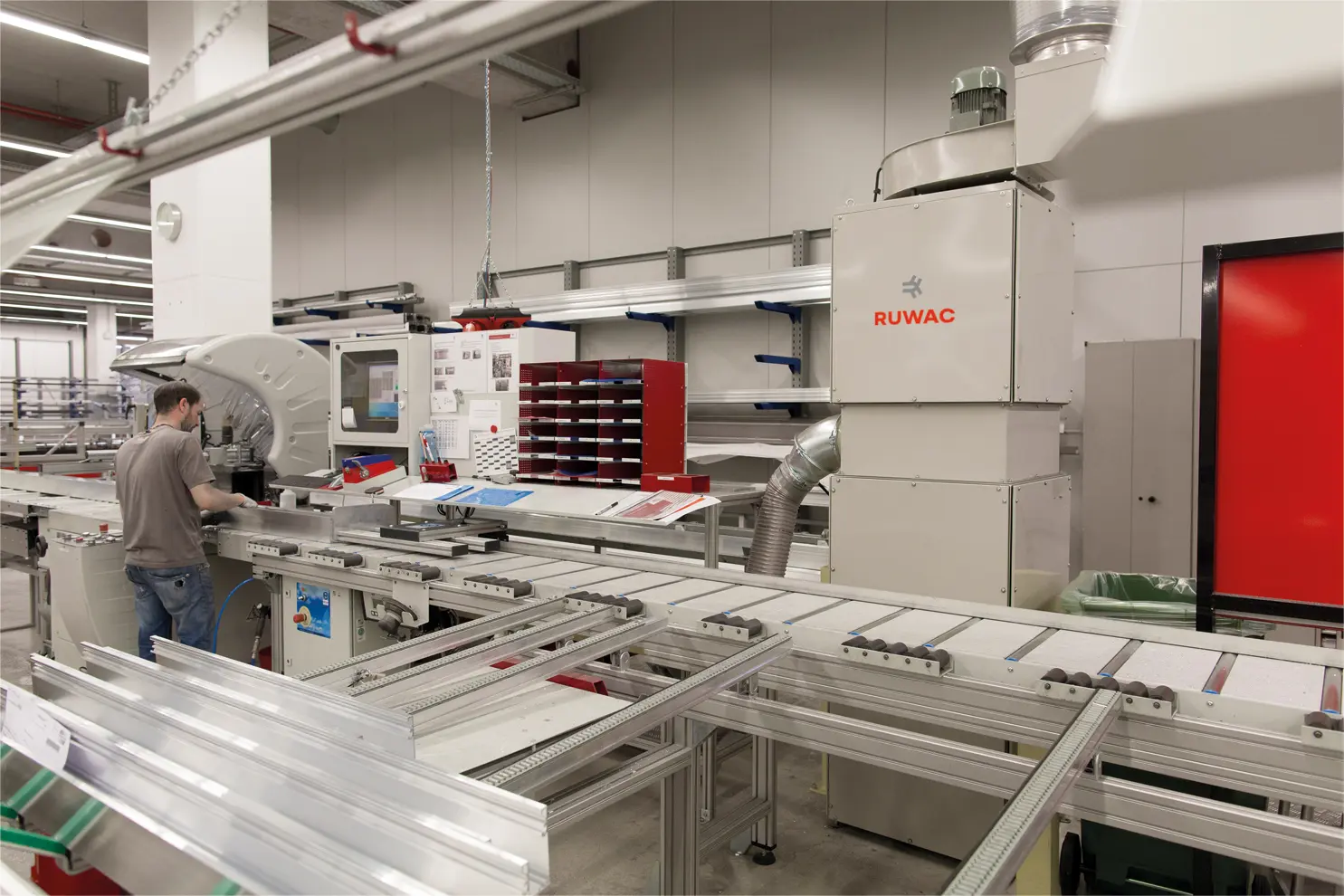
In many industrial manufacturing settings, hazardous dust is generated during manual tasks such as grinding, deburring, or cleaning components. These emissions are fine, often barely visible, and are a constant part of the work process. Precisely because they go unnoticed, they are frequently underestimated.
In such applications, process-integrated capture determines whether employees are protected in the long term. Exhaust technology must be effective where people work—quietly, reliably, and without complicating the workflow. In this way, occupational safety becomes not an additional measure, but a natural part of the process.
Product concepts for safe processes.
Hazardous dusts vary greatly in particle size, exposure levels, and source. The key factor is not a single piece of equipment, but rather the interplay of collection, filtration, disposal, and integration into daily work routines. The following product concepts illustrate typical solutions—tailored to the specific process and risk.
Frequently Asked Questions.
The danger rarely arises suddenly, but rather creeps up gradually. Fine, respirable particles remain in the air for a long time, settle in the respiratory tract, and have a cumulative effect over time. Especially in routine work processes, these hazards are often underestimated or overlooked.
No. Ventilation reduces overall exposure but does not prevent direct exposure in the workplace. Effective protection is achieved only when dust is captured as close as possible to the source and removed in a controlled manner.
A central one. Depending on the type of dust and the health risks involved, specific filtration efficiency levels are required. High-quality filters ensure that particles do not re-enter the ambient air and that the protective effect is maintained over the long term.
Because exposure occurs during normal operations, not just during cleaning. Protective measures must be integrated into work procedures and remain effective at all times—regardless of the shift, routine, or person involved.
Hazardous dusts primarily affect people, not the equipment. The risks are less dramatic but serious in the long term. While explosion protection responds to specific conditions, health protection addresses continuous exposure.
Jointly Assessing Health-Hazardous Dusts
Hazardous dusts do not have an immediate effect, but rather accumulate over time. The appropriate protective measures depend on the material, the source of the dust, and actual work processes. RUWAC helps you assess exposure levels based on sound technical expertise—and develop solutions that work in everyday practice.